Guest blog by Dilly Williams who designed and wrote The Sapperton Wilder ‘Past, Present and Future’ project, hosted on the Sapperton Wilder website, which was created to help narrate the benefits of regenerative farming.
I originally trained as a landscape architect and over the years began working increasingly as an illustrator. I’ve always been interested in ecology and natural systems and in 2024 I enrolled on a Master’s in Applied Ecology at the University of Gloucestershire. This project was created in response to the brief for the Field Ecology module, which required students to undertake a project that was useful to a host organisation, such as Sapperton Wilder.
The latest reports on biodiversity loss and ecosystem collapse are a little overwhelming. But understanding that nature-friendly, regenerative farming can mitigate the impacts of many environmental issues can help foster a more positive outlook for the future. 70% of the British land is used for agriculture, so these benefits can be amplified at a landscape scale.
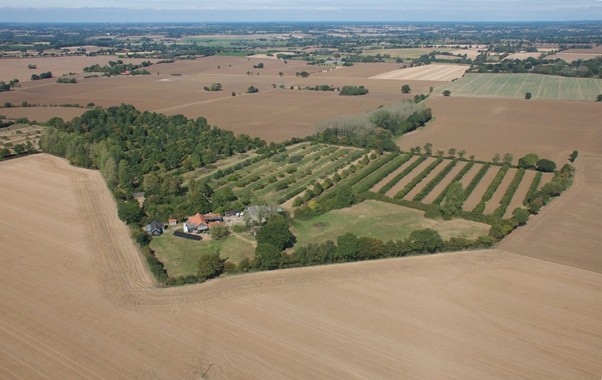
Innovative farms that have been using regenerative principles for decades, such as Wakelyns Agroforestry farm in Norfolk, are already demonstrating many benefits, including improved soil health, biodiversity gains, and mitigation of the impacts of a changing climate.
This inspiring aerial photo of Wakelyns shows the contrast between agroforestry and the surrounding conventional arable farms.
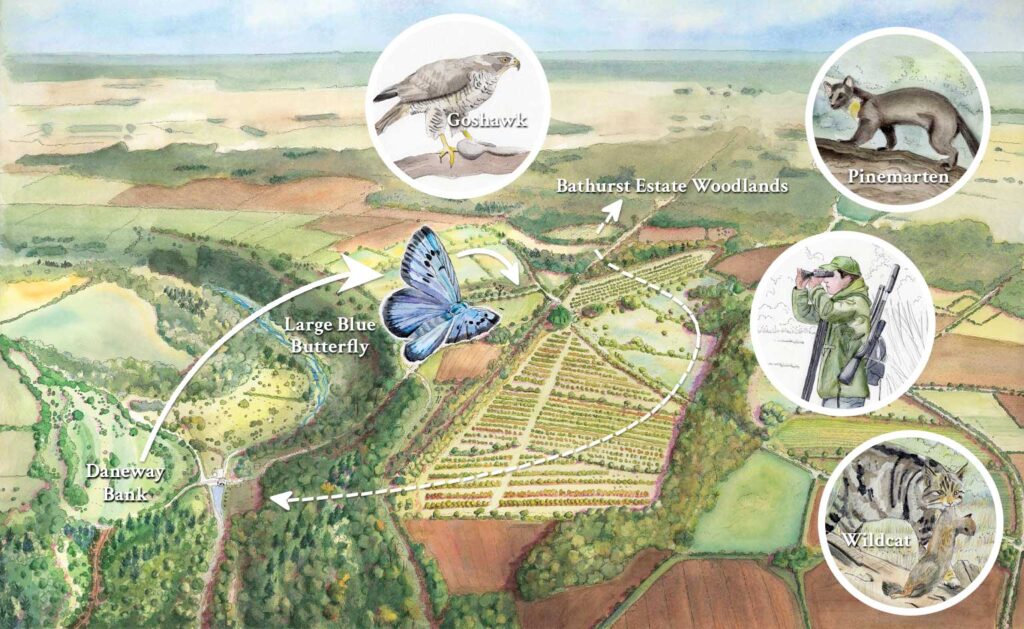
I wanted to help people understand how natural processes and cycles are restored through regenerative farming, and in particular the role livestock can play in supporting biodiversity. Presenting ecological concepts through art connects people emotionally with the subject. There is a neuroscientific basis for why triggering an emotional response creates connection and trust and overcomes the tendency for people to favour information that affirms prior beliefs. ‘A picture speaks a thousand words’ is a cliché based on fact; art can quickly communicate information in an easy-to-comprehend format.
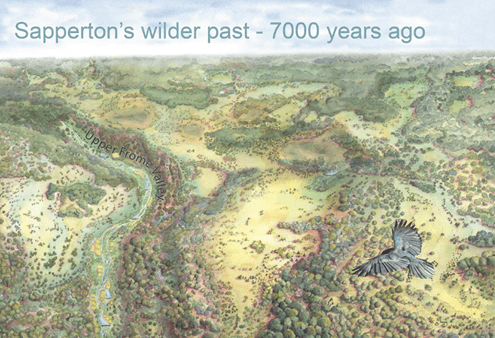
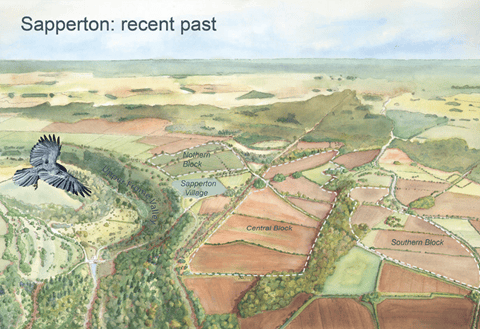
The images move through the first decade of this century and show how the landscape looked under intensive agriculture, the accompanying text explores some of the associated problems.
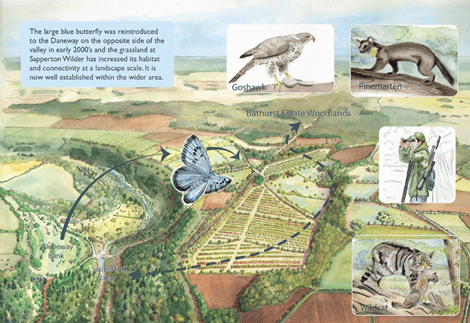
And finally, a visualisation of how the landscape could look after thirty years of being farmed regeneratively by the Sapperton Wilder team. It illustrates the benefits of both increased biodiversity and increased resilience to the impacts of a more extreme climate, such as reducing flooding and the severity of droughts.
The ‘Past, Present and Future’ project was well received by the team at Sapperton Wilder, and I wanted to explore further the potential for art to engage people with ecological concepts. Scientific illustrations have been used for millennia to help explain how the natural world works. Illustrations can create views that reveal the inner workings of a subject while still showing the context of the exterior, making them easier to understand, relatable, and inspiring.
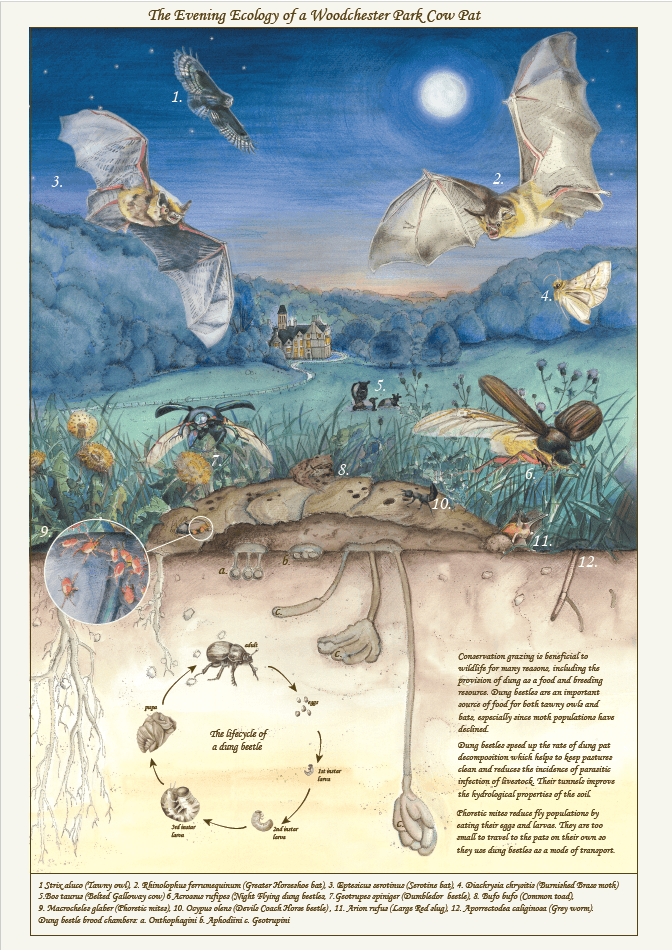
For my dissertation, I carried out a biodiversity audit of dung beetles at two National Trust properties within the Stroud Landscape Project area. The outputs included an illustrated poster titled ‘The Nighttime Ecology of a Woodchester Park Cowpat’, a field guide of the species found and an academic poster. Each explored a different way to communicate ecology through art and graphics.
I’d love to create more ecological illustrations, I have a website with examples of my work and contact details – https://dillywilliams.co.uk/dilly-williams.