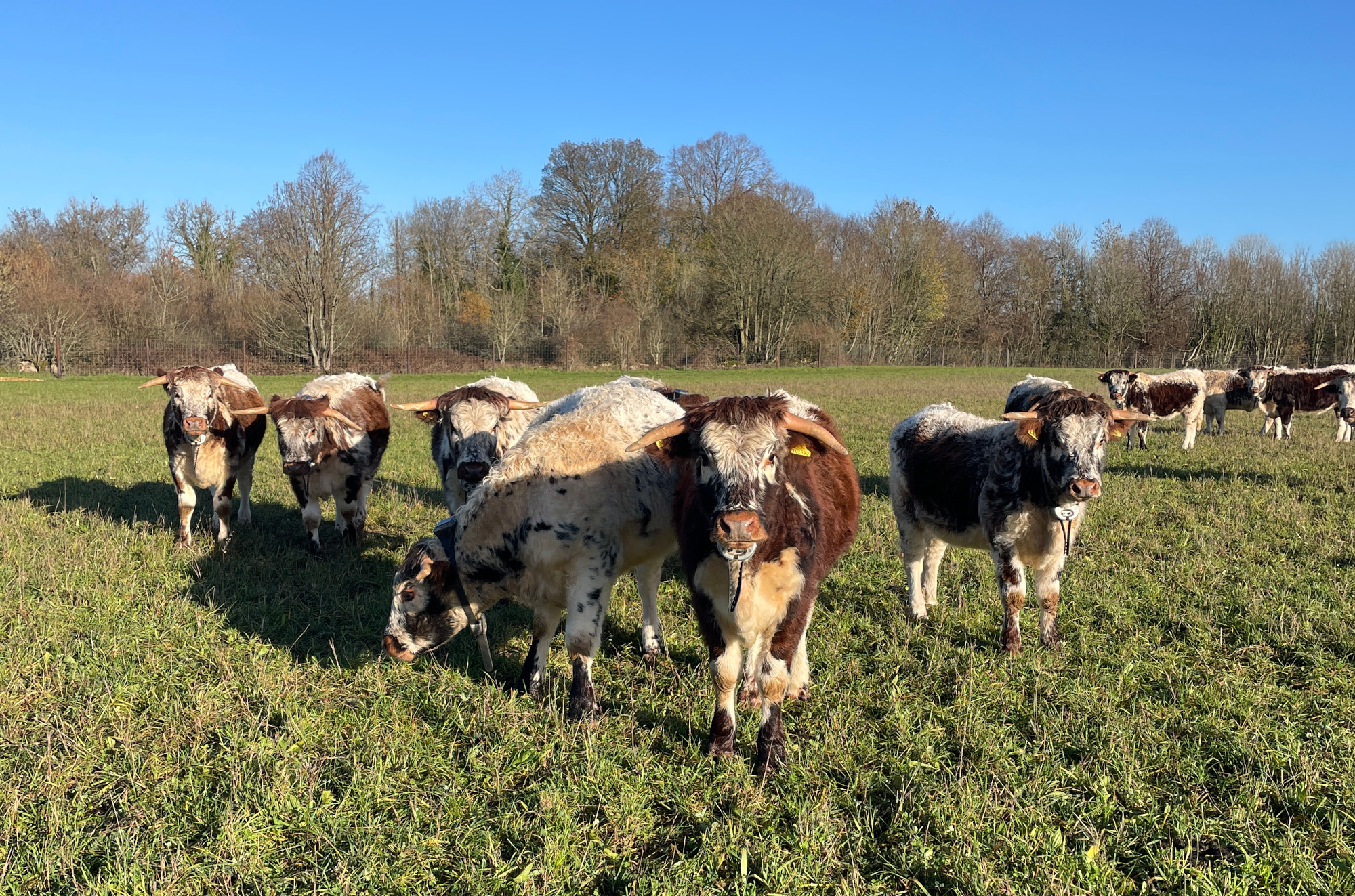
Sapperton Wilder is transitioning into a mixed farming system. In November 2025, twelve English Longhorns, from the renowned Fishwick herd, arrived and are happily grazing our herbal leys.
The presence of grazing herbivores is an important part of the economic model of the project - producing high quality meat as well as other animal products. Longhorn beef is prized for its superior flavour and tenderness which is thanks to their longer maturing time.
The cattle also provide essential grazing services that will benefit the land and ecology in a variety of ways. Herbivores are agents of change and when managed well, help restore balance and nutrients back into the soil.
The cattle have been fitted with virtual fence collars (thanks to our FIPL grant) enabling us to move, monitor and manage our herd. These collars are an exciting tool for adaptive management grazing. You can find out more about the virtual fence collars in our blog.
Adaptive management grazing, also known as regenerative grazing, is a flexible grazing method designed to mimic the natural movement of wild herds. The animals are kept in a small area of the field for a short time and then moved to a new part of the field, allowing the plants to fully recover. This ‘pulse’ of activity has been shown to improve soil health and capture more carbon in the ground.
The herbal ley is extremely beneficial to the health of the cattle - the wide variety of plants provides a “salad bowl” of nutrition and acts as a natural pharmacy for the cattle. You can find out more about how the herbal ley acts as a natural pharmacy here.