
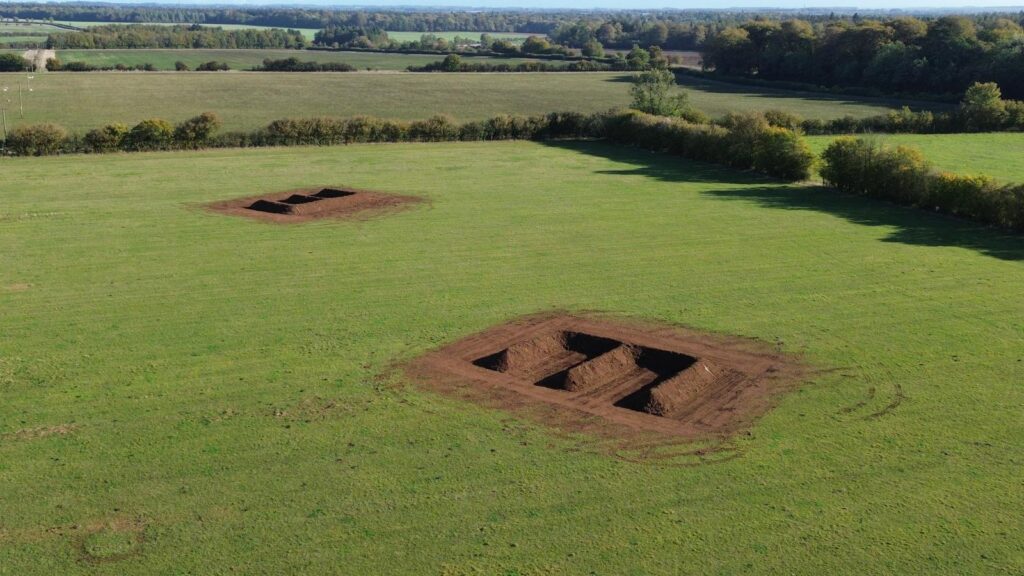
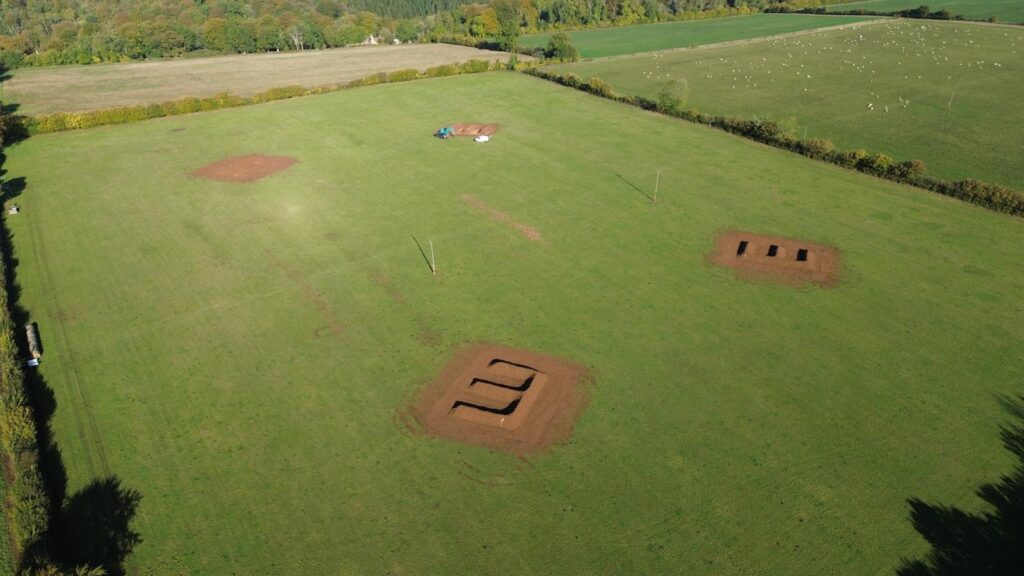
At the end of October, we installed four butterfly banks in our Northern Block.
These innovative E-shaped banks are designed to help butterflies and other insects cope with extreme heat. Butterflies and other insects are highly sensitive to temperature changes and if it gets too cold or too hot, they cannot fly, feed, or mate. As extreme heat events become more frequent with climate change, providing microclimates and shaded refuges is vital for their survival.
To tackle this challenge, researchers at University of Cambridge have been working with landowners such as Sapperton Wilder to install butterfly banks. These banks serve as a perfect experimental design to study these effects. The banks provide:
- Microclimate Control: The unique shape of the butterfly banks creates varied temperatures, shade, and shelter, helping butterflies regulate their body temperatures.
- Controlled Research: This E-shape allows researchers to accurately monitor how slope direction and shelter affect insect behaviour in a way that can be replicated across other conservation sites.
- Proven Impact: Research by the Wildlife Trusts and the University of Cambridge shows these features work. During the 40°C heatwave in 2022, 97% of individual butterflies took refuge in sheltered and shaded locations like these banks. Once established, the banks also support a higher abundance and variety of ground-dwelling invertebrates compared to flat fields.
We will be actively monitoring our new butterfly banks to understand how they benefit local insect populations and to guide future land management.
Learn More
Explore other butterfly banks:
Wildlife Trust for Beds, Cambs & Northants
University of Cambridge Butterfly Banks