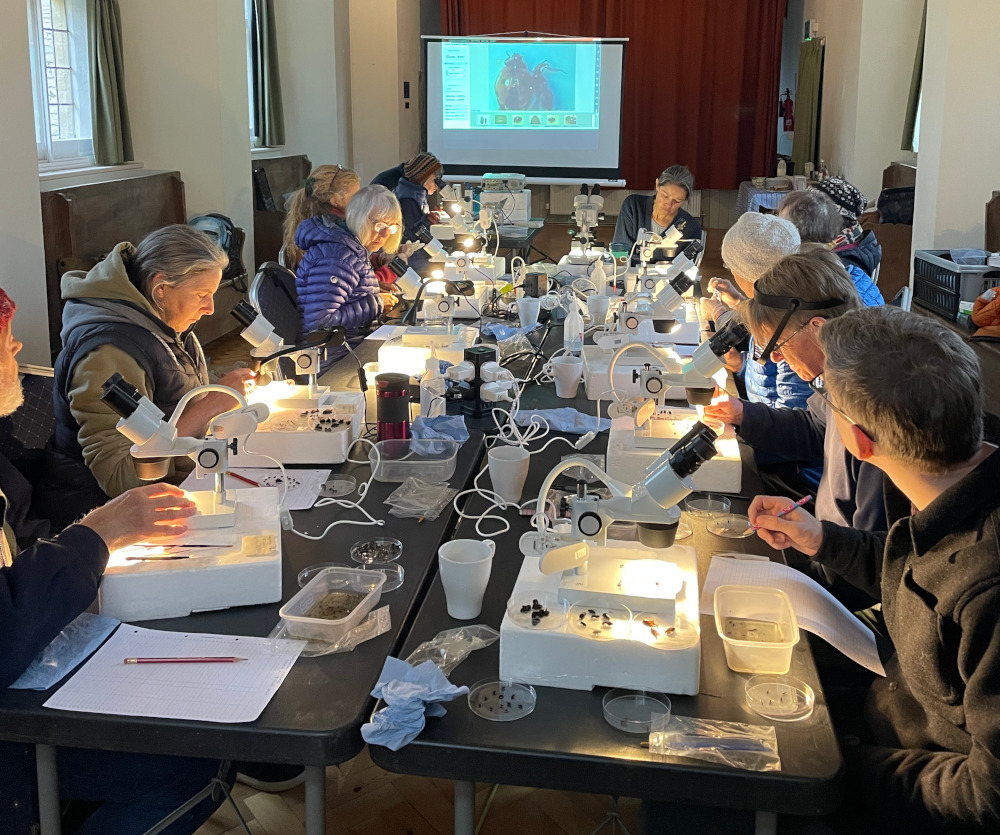
Over the past fortnight, we’ve been exploring the wonderful world of flying insects through our annual para-taxonomy workshops, run in partnership with invertebrate expert Kathy Meakin from Evidence Nature.
This is our second year using para-taxonomy to discover which insects are living on the farm and the data we collect plays a vital role in guiding our ongoing farming and land management decisions. It also adds to a growing dataset of results from the surrounding area, allowing us to compare our results to others.
Flying insects are declining at an alarming rate, making data collection even more important if we want to understand and protect this critical, and sadly under-represented, part of the natural world.
What is para-taxonomy and why do we use it?
Para-taxonomy is a collaborative biodiversity research method where non-specialists sort organisms into functional groups based on easily observable external features, or as Kathy puts it in our workshops, playing a game of “Snap!” and “Bingo!”
It offers a low-cost, accessible way to collect vital data about the abundance and diversity of flying insect species across our land. This data tells us which pests and pest predators are present on the farm, while helping us track how our regenerative practices impact species richness over time.
Harnessing natural pest predators brings huge benefits for both our farm and the wider environment:
- “Free” Pest Control: Native predators (such as ladybirds, hoverfly larvae, ground beetles, and parasitoid wasps) naturally keep UK crop pests (such as aphids and caterpillars) in check.
- Minimising Chemical Resistance: Moving away from synthetic insecticides prevents pests from developing chemical resistance, replacing reliance on sprays with dynamic biological control.
- Protecting Soil and Ecosystem Health: Avoiding broad-spectrum sprays protects non-target organisms – including crucial pollinators and soil-dwelling species like wolf spiders and dung beetles.
- Climate & Seasonal Resilience: A diverse, balanced insect population creates a natural buffer against sudden pest outbreaks during unpredictable weather.
This year, we re-sampled our herbal leys and expanded monitoring into both our agroforestry trial plot and our conventional control field.
We are especially excited to see how morphological species richness and overall insect abundance may have shifted following the introduction of our English Longhorn herd to the herbal ley fields in November 2025!
How the para-taxonomy process works
1. Field Sampling (June – July)
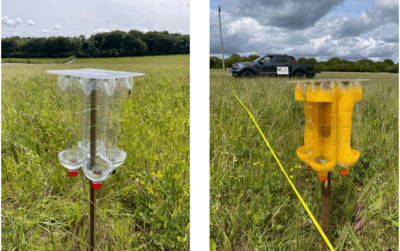
We set up low-cost Alexander flight interception traps across the test fields for two weeks at peak flowering season. Made from upturned plastic bottles containing a vinegar solution, these traps capture enough representative data without expensive equipment. Samples are then safely preserved in alcohol.
2. Sorting & Identification (The Workshops)
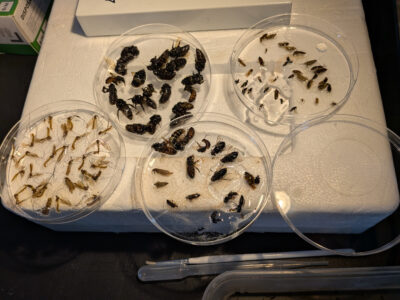
Volunteers sort through the samples, grouping visually similar insects together – Snap!
3. Microscopic Verification
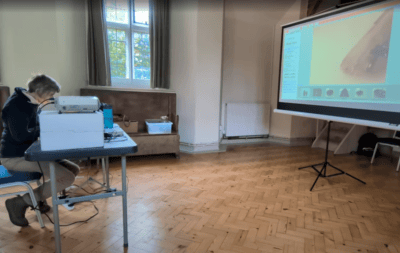
Using microscopes and Kathy’s expert knowledge, Kathy guides everyone through the distinct physical characteristics of each group so we can confirm matches – Bingo! This narrows each insect down to at least a functional group (i.e. parasitic wasp). Once everyone has made a list of their insects, Kathy spends the winter months collating and analysing the data. Since everyone uses the same method, she can compare how our fields fared to other farms or pieces of land in the surrounding area.
What’s Next?
The final results will be analysed and received by the Spring. Not only will we get to see how our site compares to others, but also how our fields compared to last year’s results. A huge thank you to Kathy for sharing her wealth of invertebrate knowledge with us, and to all the fantastic volunteers who gave their time to help sort through this year’s samples. We can’t wait to share the final results with you in the Spring. You can read the full results from last year’s sampling in our previous blog post.
Quote of the Day
“Every bristle on a blow fly is a bit of tech which helps the fly find carrion from miles away”. Kathy Meakin